
Little Soldiers: 'Unexpected objects often create the most memorable moments'
Florent Baudry and Adrien Fenouillet on their little green army tabletop war game that incorporates household items

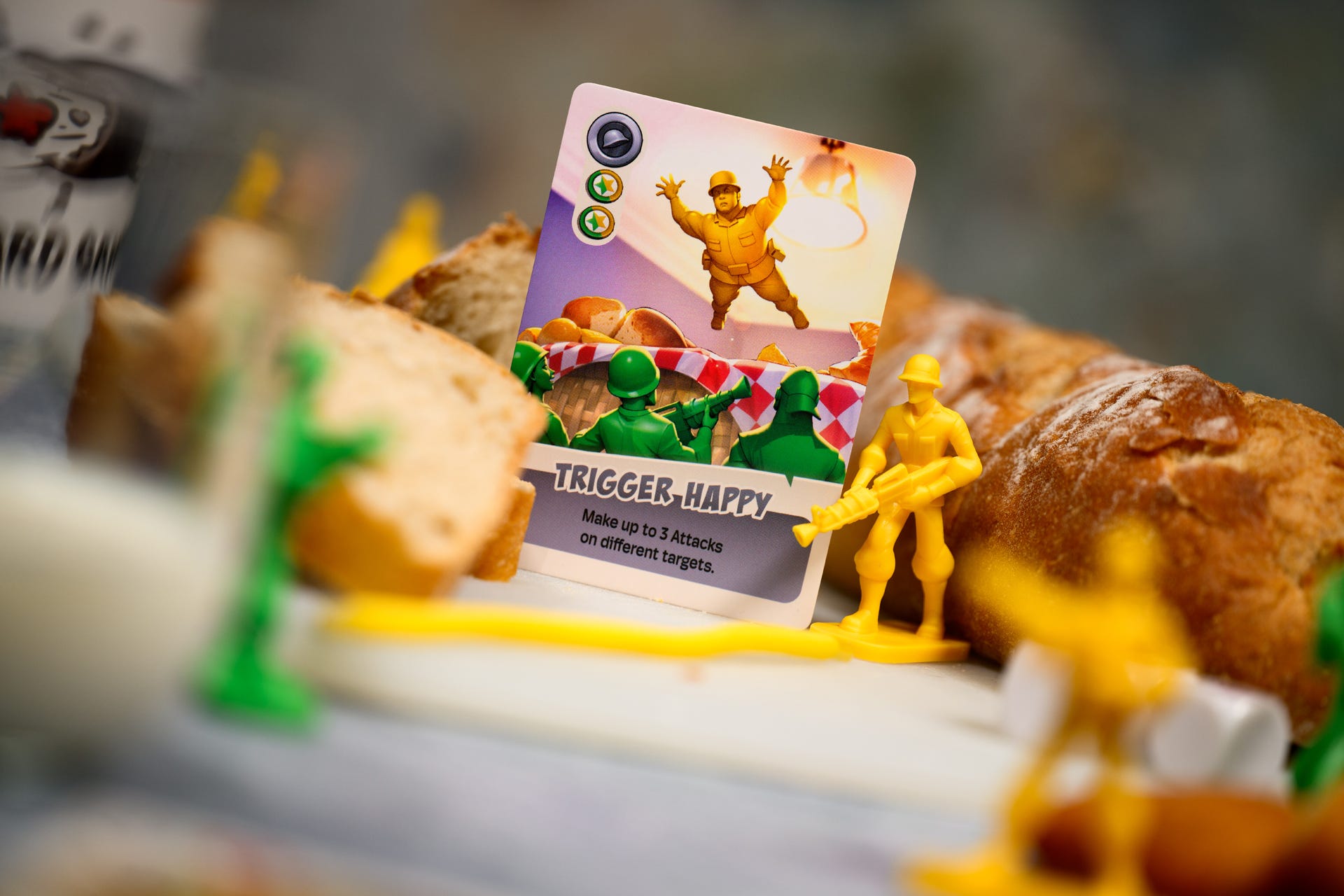
Battle around your breakfast. Clash around your coffee cups. Skirmish amid your sausages.
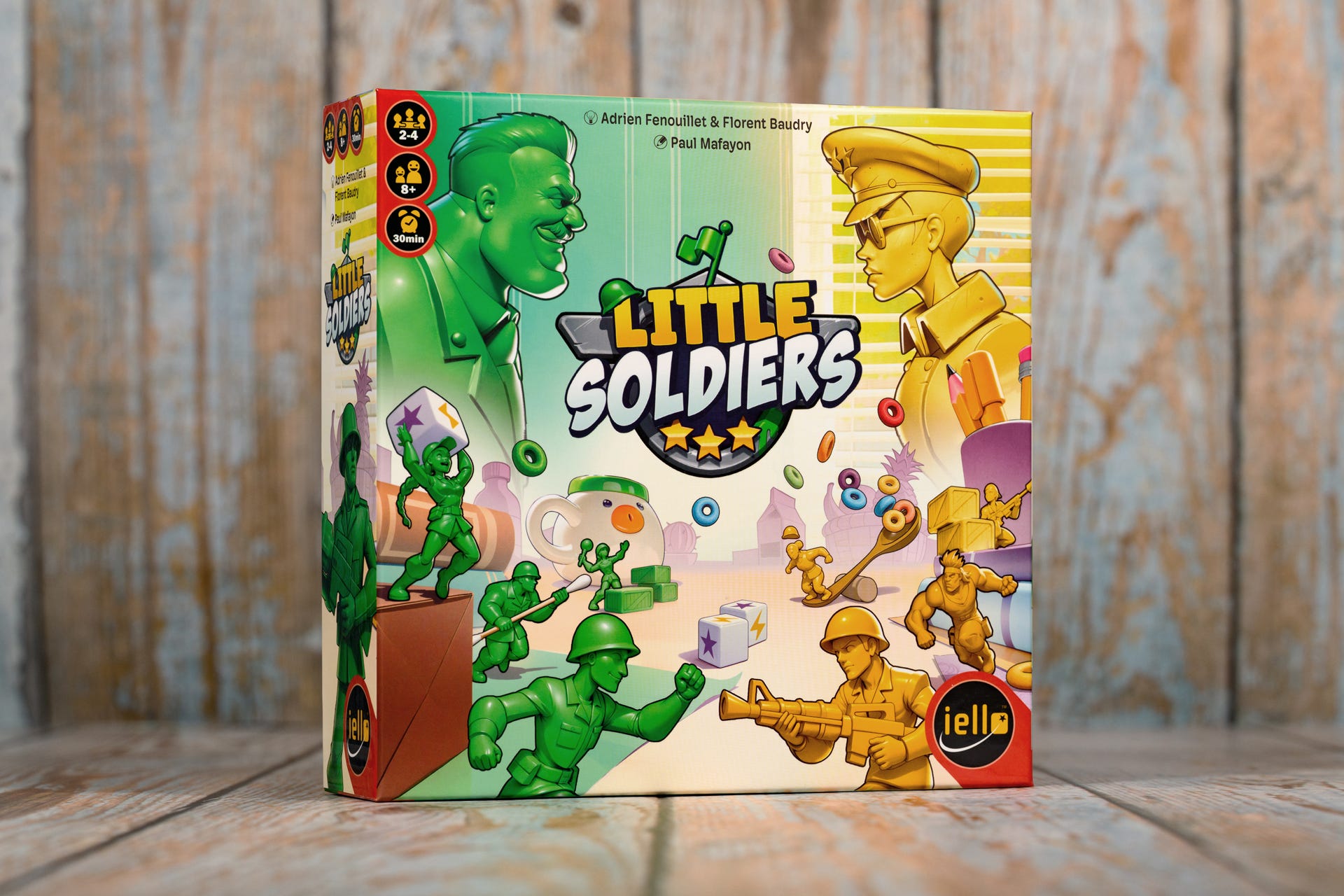
Little Soldiers takes the contents of your tabletop and turns it into a battlefield, taking the Bucket O’ Soldiers of your childhood some rules of conflict to play with. Iello’s game takes a squad of green army men – including specialised snipers and generals – and puts them in armed conflict against your opponent across several levels of difficulty, complexity and modules.
It’s a wargame of dice rolling measurement and movement, with a dose of dexterity thrown in.
To find out more, we spoke to the game’s designers, Florent Baudry and Adrien Fenouillet.
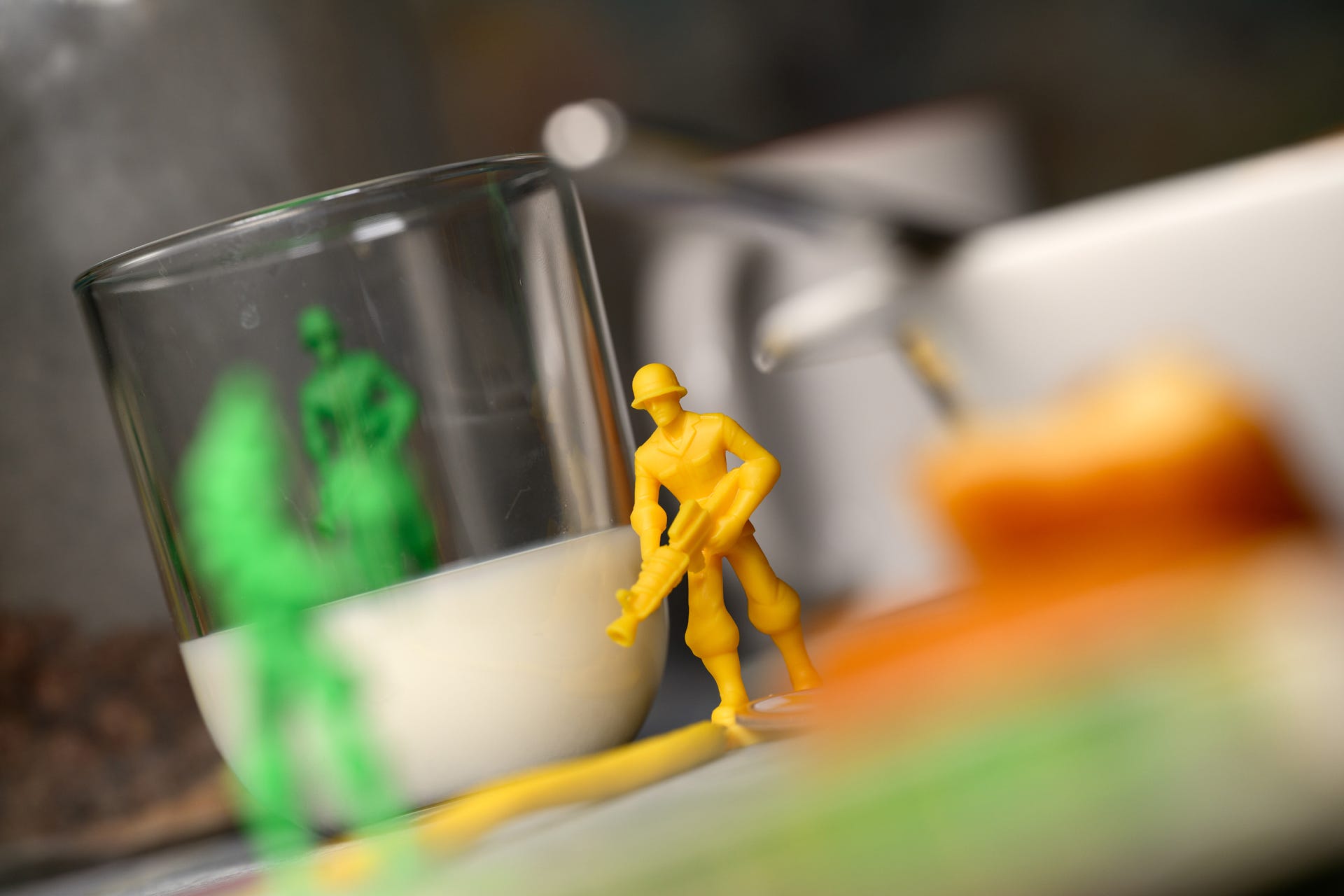
For the uninitiated, how would you describe Little Soldiers?
Little Soldiers is a fast-paced, family-friendly wargame. The goal is simple: introduce a genre that is usually considered more ‘expert’ to a much wider audience, thanks to clear, intuitive rules and a very visual, tactile approach to gameplay.
The game can be played with several scenarios. How do these differ?
The game includes three booklets that gradually introduce the rules. The first focuses on the basics: movement, attacks, and each soldier’s special actions. The second allows players to add extra rules, in any order they choose, to spice up their games. The third booklet offers scenarios with unique objectives and twists to renew the experience.
For example, the King of the Hill scenario shifts the focus to holding a central objective rather than breaking enemy toys.
The Battle Royale mode supports up to six players, with very fast, chaotic, and highly punishing rounds – it really feels like a playground free-for-all where anything can happen.
Finally, the last scenario introduces a cooperative mode, where all players team up against a common threat.
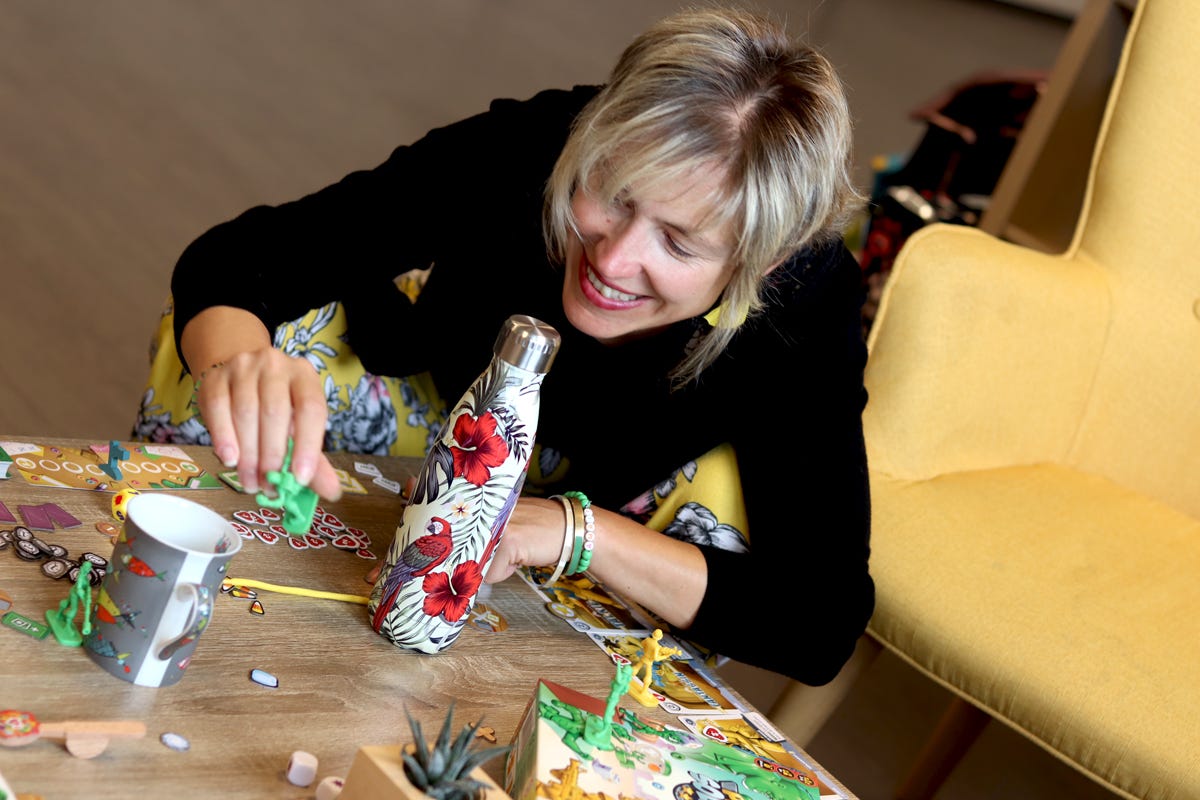
Do each of the soldiers in the unit have special abilities?
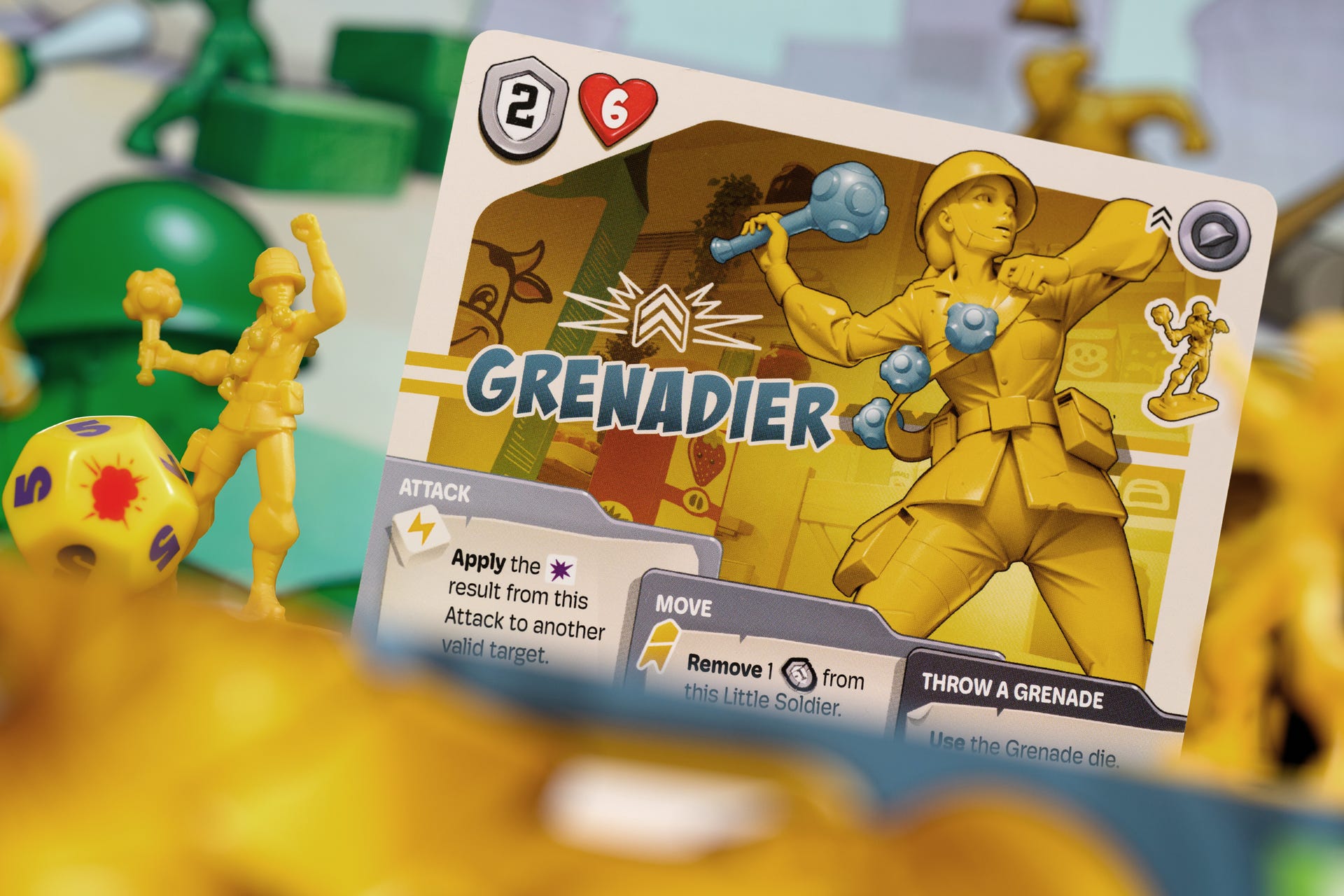
All Little Soldiers can move and attack, but each one also has a unique special action and ability.
The infantry can move after attacking and weaken enemy soldiers. The sniper can mark targets and deliver devastating attacks. The grenadier can hit multiple enemies and throw grenades on to the battlefield. Finally, the Talky plays a support role, including calling in mortar strikes.
What were the main influences with this game? I’m reminded a little of Micro Machines, especially the old video game, and how tracks could be created using household items.
The most obvious inspiration is Toy Story, with its playful and imaginative take on toys. But Little Soldiers also draws heavily from the games and worlds we grew up with: board games like HeroQuest or Warhammer Battle, as well as cult films such as The Indian in the Cupboard and Small Soldiers.
Overall, the game is rooted in a shared sense of nostalgia, inspired by the toys and pop culture of the 80s and 90s.
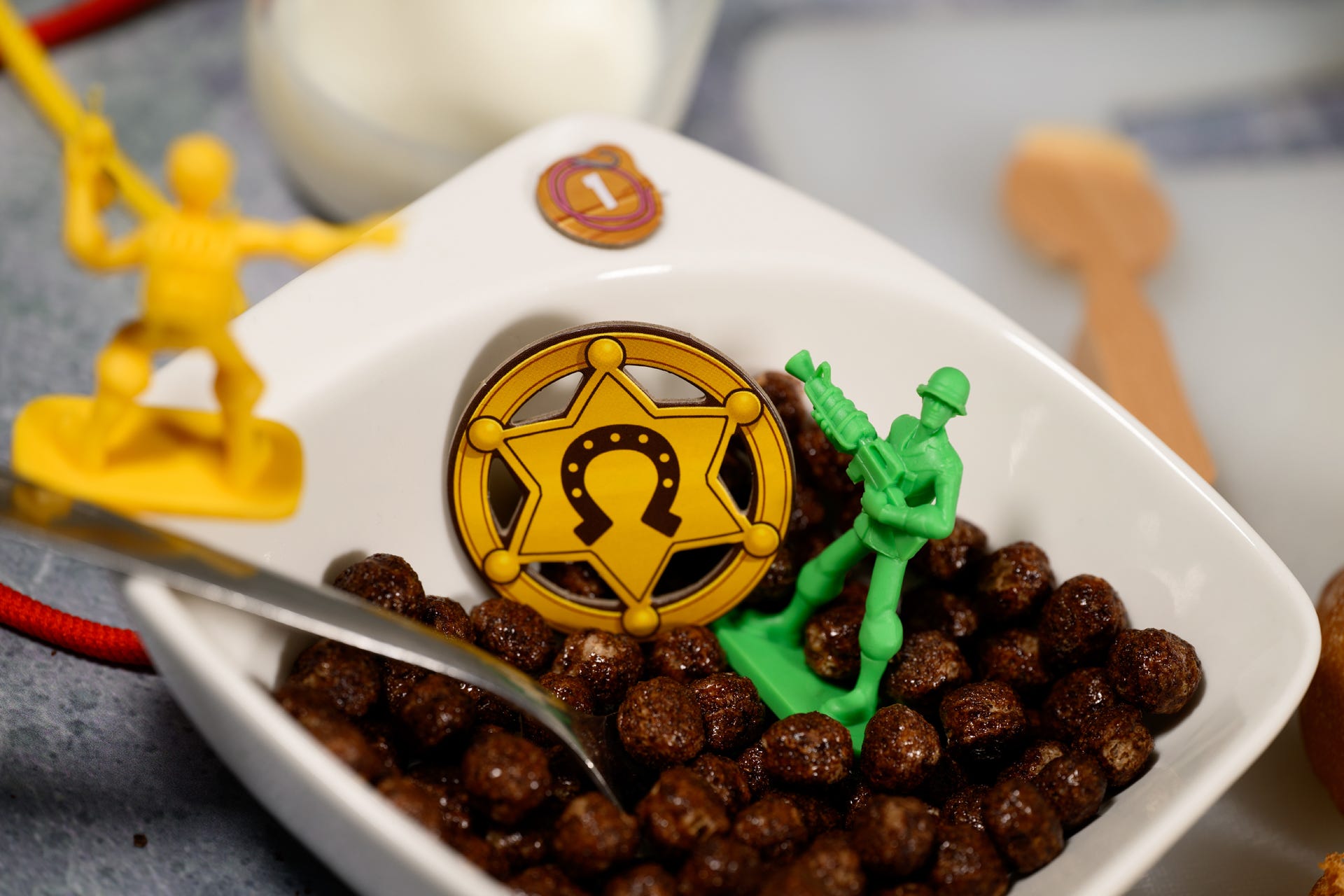
How do players make their attacks with the little soldiers? And how does the wooden catapult get involved?
Players use order tokens to command their soldiers and perform actions such as attacking any enemies they can see by rolling five dice (which can be rerolled once, or twice if they are at close range). Once all players have spent their tokens, the round ends.
For example, you might assign an order token to your talky and trigger a mortar strike. Using the wooden spoon like a catapult (just like in a school cafeteria!), you launch a token onto the battlefield to deal as much damage as possible.
How did you find the collaborative process between you? What were your methods?
We had a very clear vision of the game we wanted to create. IELLO trusted us and gave us the opportunity to develop it internally, which is a real privilege. Working as a duo allowed us to switch roles regularly – designer, project manager, playtester – and to maintain a global vision of the project, from game design to production.
Most of the time, one of the two authors would come up with a new rule, a new mechanic or a new ability. After some initial trial-and-error, we’d test these new ideas, and if we still liked them, we’d try to simplify them as much as possible.
The game embraces deploying objects from around the house into the game play. What items would you recommend players pick up to use for the best tactical effectiveness?
The easiest option is to use the game box itself (both the boxtop and the bottom), which was specifically designed for that purpose.
During playtesting, one of the most fun and surprisingly effective elements we used was simply placing a shoe on the table.
Honestly, there are no ‘bad’ terrain pieces – unexpected objects often create the most memorable moments. The best advice is to use whatever you have nearby, without overthinking the perfect setup.
What were the best pieces of feedback that you got during the playtesting of the game?
Our favourite feedback is when players start making sounds like ‘aaah!’ ‘tatatatata!’ or even ‘boom!’ during the game. That’s when we know it works. In fact, that’s exactly how we played it ourselves throughout development.
What games do you enjoy playing together at home and with family members?
We already play a lot of different games. At home with family, I personally tend to go for simple and fast-paced games, such as Strike or Pina Coladice (Adrien).
I’m also into all kinds of games, but I have to admit I have a soft spot for games with rich, immersive worlds (Great Western Trail, Arkham Horror LCG, Andor). I love being able to tell myself a story. And when I’m with Adrien, it’s all about Blood Bowl and lots of RPGs. (Florent)
Are there any future plans for the game, including expansions? What would these involve if so?
The final version of the game only represents a small part of everything we imagined. Many ideas had to be set aside, even though the base box is already quite full and generous.
We are already actively working on two expansions. Each one will introduce new soldiers (one green and one yellow) with original mechanics, along with new objects to customise the battlefield and new tactical cards. More news coming very soon.
For more information, visit iellogames.com
Almighty: Playing good god/bad god on the tabletop

Roll Camera! designer Malachi Ray Rempen discusses the video game influences on his upcoming scroll-based board game.
Family game reviews (from the perspective of a bewildered father and an over-excited child)


Share The Generations Games? Ah, go on…
if you made it this far, you’re probably keen on family tabletop games, and games with a strong social theme. Forwarding to a like-minded friend can make a huge difference to the future of The Generations Games and our hopes to expand our output.